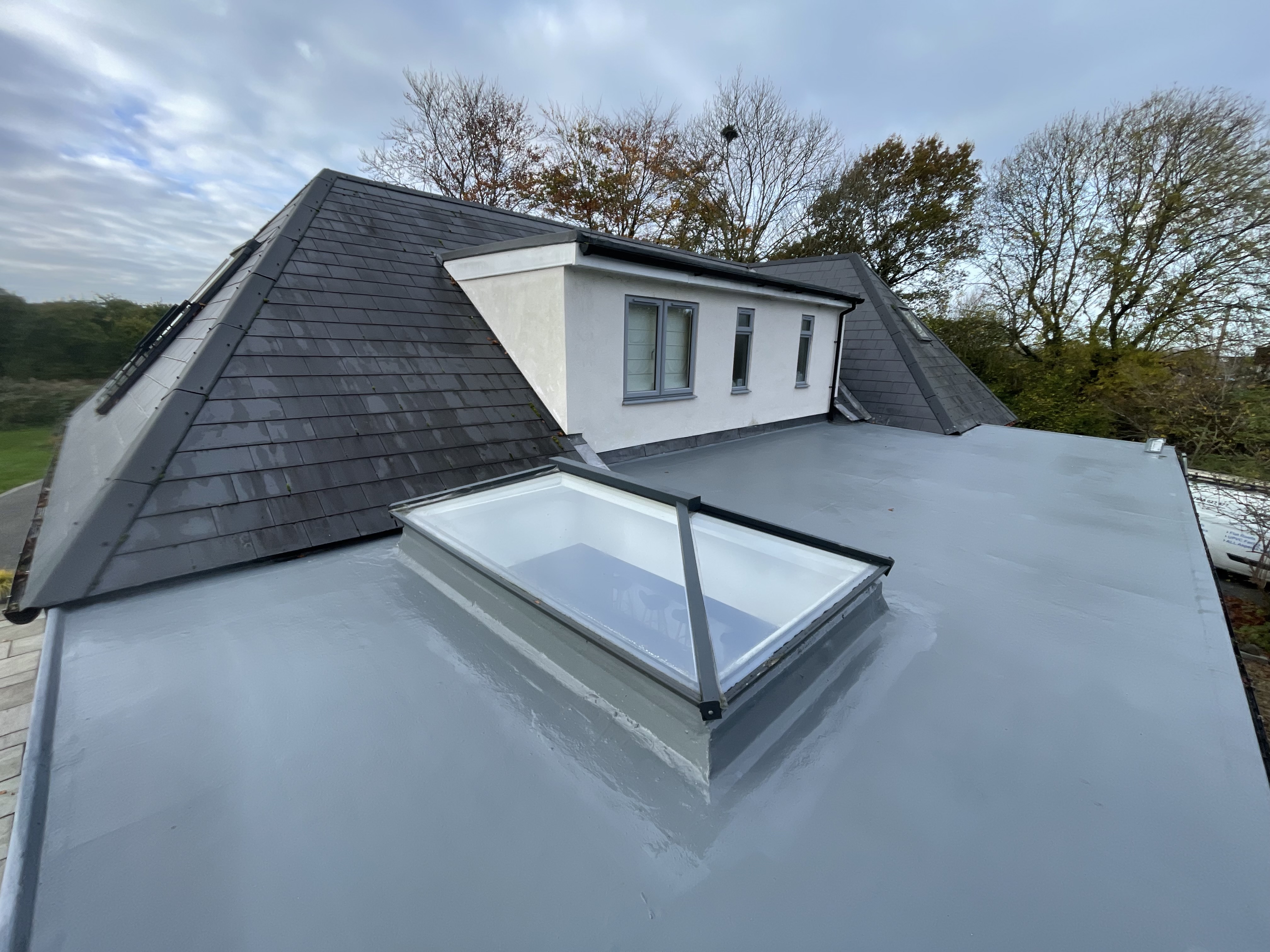
Both are popular across Bristol, but they're very different materials. Here's how Spanish slate and concrete tiles compare on cost, lifespan, looks, and performance.
When it comes to a re-roof in Bristol, the two materials we're asked about most are Spanish slate and concrete interlocking tiles. Both are excellent, long-lasting choices, but they suit different homes, different budgets, and different styles of property. We recently completed a full re-roof using natural slates, so it felt like a good time to lay out the differences honestly and help you work out which is right for your home.
There's no single right answer. The best material depends on your roof pitch, your budget, the character of your property, and how long you want the roof to last.
Spanish Slate: The Premium Choice
Spanish slate is a natural stone, quarried and cut into thin, flat slates. The thickness grade we use refers to roughly 7mm, which is the standard for residential roofing. It's the material you see on the best-looking period properties across Clifton, Westbury-on-Trym, and the older Bristol suburbs.
The big advantage of natural slate is its appearance. It's flat, tight, and elegant, with a natural dark grey-blue colour that doesn't fade. It sits flush to the roof line in a way that concrete tiles, with their profiled curves, simply can't match. For period properties, stone-built cottages, and homes where kerb appeal matters, slate is the gold standard. It also lasts an extraordinarily long time. A properly installed slate roof will comfortably see 75 to 100 years of service, and often more.
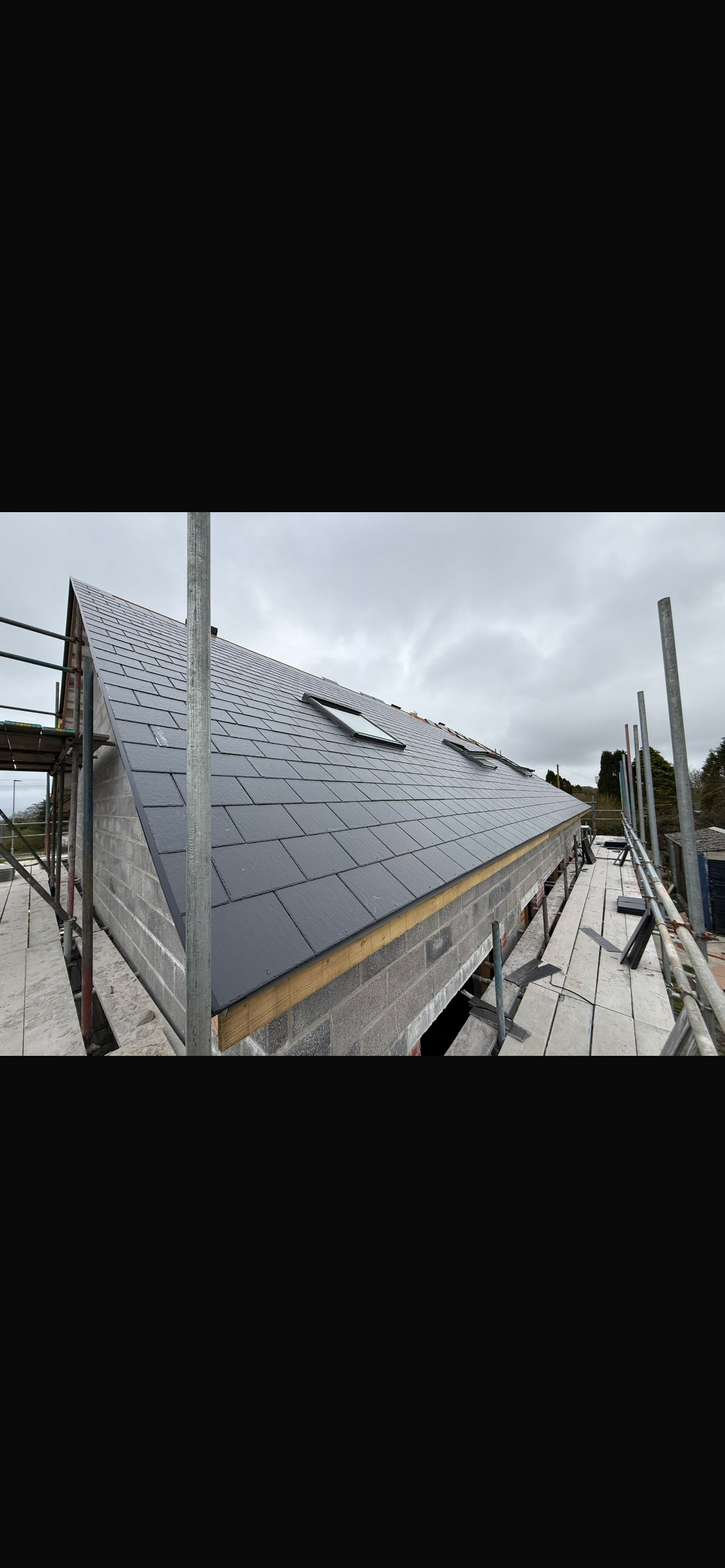
The trade-off is cost and weight. Natural slate is more expensive per square metre than concrete tile, and because the slates are thinner, they're fixed with copper or galvanised nails onto treated timber battens. It's a more skilled, more time-consuming installation. On our recent re-roof, for example, every slate was fixed with copper nails onto new treated battens over a high-performance breathable membrane, with new leadwork and a dry ridge and verge system to finish. The result is a roof that looks stunning and will outlast most of us.
Concrete Tiles: The Practical Workhorse
Concrete interlocking tiles are the most common roofing material on newer British homes, and for good reason. They're tough, relatively inexpensive, and quick to lay. The interlocking design means each tile overlaps its neighbour, which makes them very weather-resistant even on lower-pitched roofs where slate wouldn't be suitable.
Concrete tiles come in a range of profiles and colours, from smooth flat finishes to bold, double-cambered designs that suit modern estates and larger properties. They're heavier per square metre than slate, so the roof structure needs to be able to take the weight, but on most modern trussed roofs that's not an issue. They last 40 to 60 years typically, which is shorter than slate but still a full lifetime for most homeowners.
How They Compare Head to Head
- Lifespan: Slate 75 to 100+ years, concrete 40 to 60 years
- Cost: Slate is the premium option, concrete is more budget-friendly
- Weight: Slate is lighter per square metre, concrete is heavier
- Appearance: Slate is flat and elegant, concrete is profiled and bold
- Pitch: Slate needs a steeper pitch, concrete works on lower angles
- Maintenance: Both are low, but slate needs fewer replacements over its life
Which Suits Your Home?
If you live in a period property, a stone cottage, a Victorian terrace, or anywhere where the existing roof is slate, matching it with natural Spanish slate preserves the character and the value of the home. If you're in a newer build, a bungalow, or a property where the roof pitch is shallow, concrete interlocking tiles are usually the better practical choice. And if you're somewhere in between, we'll talk you through both options, show you samples, and help you weigh up the cost against the lifespan and the look.
Our recent slate re-roof is a good example of slate done right. The property needed a full strip-back because the existing roof was past saving, so we stripped it to the rafters, installed a complete new specification roof. Breathable membrane, treated battens, natural slates, copper nails, new leadwork, and a dry ridge and verge system. The finished roof looks immaculate, it's properly ventilated, and it's guaranteed for the long term. That's what a slate re-roof looks like when it's done properly.
"Excellent job, highly skilled and dependable. Does a good job every time, all work carried out professionally and left clean and tidy."
Not Sure Which Way to Go?
The best way to decide is to have a roofer come out, look at your roof, and talk you through the options based on what's actually there. We'll assess the pitch, the structure, the existing material, and your budget, and give you honest advice on what suits your home. Call us on 07848 027477 or request a free quote and we'll come out across Bristol and the surrounding areas to take a look.
Frequently Asked Questions
Is Spanish slate better than concrete tiles?
Spanish slate lasts longer (75 to 100+ years vs 40 to 60 for concrete) and looks more elegant on period properties, but it costs more. Concrete tiles are tougher, more budget-friendly, and suit lower-pitched roofs. The right choice depends on your property and budget.
How long does a Spanish slate roof last?
A properly installed Spanish slate roof lasts 75 to 100+ years. We use breathable membranes and treated battens, fixed with copper nails, to maximise the lifespan of every slate roof we fit.
How thick is Spanish slate?
The standard grade for residential roofing is roughly 7mm thick. It's the grade we use on full re-roofs, fixed with copper nails onto treated battens over a breathable membrane.
How much does a slate or concrete re-roof cost in Bristol?
Costs vary based on roof size, material choice, and complexity. Slate is the premium option; concrete is more budget-friendly. We provide completely free, no-obligation written quotes so you know exactly what the work will cost before deciding.
Need a Roof Like This?
Get a free, no-obligation quote from Bristol's honest, family-run roofing team. We'll tell you straight what your roof needs.